
The Complete Guide to Energy-Efficient Door Thresholds (2026)
If your residential entrance system is leaking air, the problem often starts at the threshold. Energy-efficient door thresholds block drafts, shed water, and reduce heat transfer at the base of every entry door. This guide walks you through threshold types, sealing performance, and replacement-fit guidance so you can make a confident hardware decision for your next build or retrofit project.
What Is a Door Threshold and Why Does It Affect Energy Efficiency?
A door threshold is the horizontal component installed at the base of an entry door. It bridges the gap between the door bottom and the finished floor or sill, creating a seal against air, water, dust, and insects.
When a threshold fails or fits poorly, conditioned air escapes and outside air infiltrates. That gap can account for significant energy loss over a heating or cooling season. Choosing the right threshold material and profile directly reduces air leakage and thermal bridging at one of the most vulnerable points in your building envelope.
Common Types of Energy-Efficient Door Thresholds
Not all thresholds serve the same purpose. Here are the primary types used in residential entrance systems:
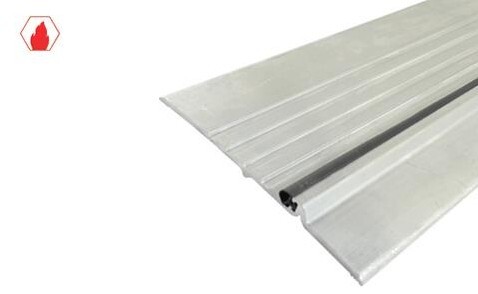
- Adjustable aluminum thresholds feature height-adjustment screws that let you fine-tune the seal against the door bottom. They work with most inswing entry doors and accommodate uneven subfloors.
- Thermal break thresholds incorporate a non-conductive barrier between the interior and exterior aluminum surfaces. This interrupts heat flow and helps minimize condensation in colder climates.
- Composite inswing sill systems pair a non-rot substrate with a vinyl or PVC riser cap. They resist moisture damage better than solid wood sills and maintain a tight seal over time.
- Interlocking thresholds use bulb seals that compress against a matching door bottom to create a continuous air and water barrier. Strybuc Industries carries Interlock threshold systems with patented water-shedding profiles, non-slip surfaces, and thermal insulation cores designed specifically for entry door applications.
How to Evaluate Threshold Sealing Performance
When comparing thresholds, look at three performance factors: air infiltration resistance, water penetration resistance, and structural load capacity. Industry testing follows standards set by organizations like the ENERGY STAR program for residential windows and doors, which outlines performance benchmarks for the full entry system.
A dual-guard vinyl seal on the threshold base adds leak protection between the aluminum body and the adjustable metal cap. Waterdrain thresholds go further by incorporating staggered weep holes that channel any moisture driven under the door back to the exterior. Strybuc's waterdrain threshold catalog section details these drainage profiles and the complementary weatherstripping options that pair with them.
How to Choose the Right Replacement Threshold for Your Entrance
Start by measuring the width of your door jamb and the height clearance between the door bottom and the subfloor. Most residential entry doors use a 4 9/16-inch or 5 1/4-inch jamb width.
Match the threshold profile to your door swing direction. Inswing doors typically need a sloped sill with an adjustable riser, while outswing doors require a flat-cap or bumper-seal threshold. If your existing sill shows signs of rot, swelling, or seal failure, a composite replacement often provides longer service life than a wood-only option.
Strybuc Industries stocks smooth-top thresholds, sealants, and door-bottom combo packs as part of its catalog of current, obsolete, and hard-to-find door hardware. That breadth means you can source a matching threshold even for older or discontinued door systems.
Maintenance Tips to Keep Your Threshold Performing
Even the right threshold loses effectiveness without periodic upkeep. Inspect the vinyl or rubber seal inserts at least twice a year for cracks, compression set, or displacement. Replace worn inserts before the next heating season to maintain a tight seal.
Clean the threshold track of dirt and debris that can prevent the door bottom from seating properly. On adjustable models, use the height screws to re-establish contact if the door has settled or the subfloor has shifted. For replacement seal inserts and threshold accessories, check your supplier's current catalog to confirm part compatibility with your specific threshold series.
Selecting an Energy-Efficient Threshold for Your Next Project
The right door threshold protects your entrance against air leakage, water intrusion, and thermal bridging while standing up to daily foot traffic. Prioritize thermal break or adjustable aluminum models for cold-climate builds, and composite sill systems where moisture exposure is high.
When you need replacement thresholds, weatherstripping, or door-bottom hardware, Strybuc Industries serves as a single source for the components that keep residential entrance systems sealed and efficient. Contact a Strybuc sales rep to identify the right threshold for your door system.